
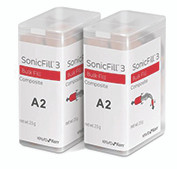
Posterior composite restorations require materials that balance efficiency, adaptability, and long-term durability. In busy dental practices, simplifying restorative procedures without compromising clinical outcomes is always a priority.
Bulk-fill composites have helped streamline restorative workflows, and SonicFill by Kerr is designed specifically with this goal in mind. By combining sonic activation with bulk-fill technology, SonicFill allows clinicians to place composite quickly while maintaining excellent adaptation and sculptability.
This article explores how SonicFill works and where it fits into everyday restorative procedures.
Clinical Snapshot: Kerr SonicFill
• Indication: Posterior composite restorations (Class I and II)
• Placement Method: Sonic-activated bulk fill
• Maximum Layer Thickness: Up to 5 mm
• Handling: Flowable during placement, sculptable when sonic energy stops
• Clinical Goal: Faster placement with reliable marginal adaptation
• Compatible Adhesives: Universal bonding systems such as OptiBond
What Makes SonicFill Different
Traditional composite placement often requires multiple incremental layers. SonicFill approaches this differently by using sonic energy to temporarily reduce viscosity during placement.
When activated through the SonicFill handpiece, the composite flows smoothly into the preparation, helping minimize voids and improving adaptation to cavity walls. Once the sonic energy stops, the material quickly returns to a thicker consistency that allows for precise contouring.
This balance between flowability and sculptability is what makes SonicFill attractive for clinicians looking to improve efficiency during posterior restorations.
Posterior Restoration Example
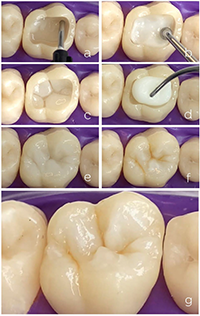
These types of restorations highlight where bulk-fill materials are most often used. Posterior teeth require strong materials capable of withstanding occlusal forces while still providing reliable marginal integrity.
Clinical Applications
Class I Posterior Restorations
SonicFill allows clinicians to place composite in thicker increments, reducing the number of layers needed for occlusal restorations. This can streamline placement while maintaining predictable results.
Class II Posterior Restorations
During proximal restorations, the temporary reduction in viscosity helps the composite flow into box preparations and adapt well to internal surfaces.
High-Efficiency Restorative Workflows
Practices with high restorative volume may appreciate the ability to place composite quickly without sacrificing handling or performance.
Chairside Tip
During posterior composite placement, many clinicians prefer nitrile gloves with excellent tactile sensitivity to maintain precise control while sculpting restorative material.
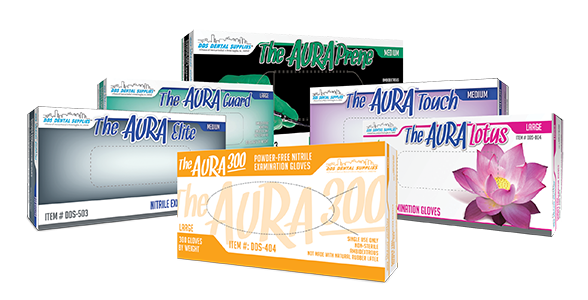
DDS Dental Supplies offers several options within the Aura glove line, including:
• Aura Elite • AuraPrene
• Aura Lotus • Aura Guard
• Aura 300 • Aura Touch
These gloves are designed to provide comfort, durability, and tactile feedback during restorative procedures.
Note: Aura Lotus gloves also feature aloe and vitamin E coating, which can help keep hands comfortable during long clinical days.
Materials Used in This Technique
Dentists performing posterior composite restorations commonly rely on a combination of restorative materials and PPE.
Kerr SonicFill Bulk Fill Composite
Used for efficient placement of posterior restorations.
OptiBond Universal Adhesive
A widely used bonding system compatible with multiple etching techniques.
Aura Nitrile Gloves
Comfortable nitrile gloves designed for durability and tactile sensitivity.
Final Thoughts
Bulk-fill composite systems like SonicFill provide clinicians with a way to simplify restorative procedures while maintaining strong clinical outcomes. By combining sonic activation with sculptable composite handling, the system helps balance efficiency and control during posterior restorations.
For practices focused on restorative dentistry, materials that improve workflow while maintaining predictable results can make a meaningful difference in daily clinical routines.