
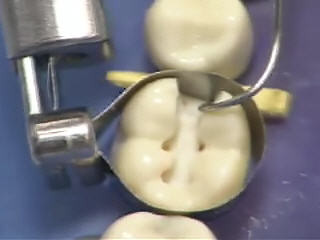
Achieving tight, predictable contact points remains one of the most challenging aspects of posterior composite restorations. Even with high-quality materials, improper matrix adaptation can lead to open contacts, food impaction, and long-term patient discomfort.
Matrix systems play a critical role in shaping restorations and establishing proper interproximal contact. Modern solutions, including sectional and pre-assembled matrix systems, are designed to improve both efficiency and clinical outcomes.
Clinical Snapshot: Matrix Systems in Posterior Restorations
• Primary Purpose: Recreate interproximal contact and contour
• Common Use: Class II composite restorations
• Key Challenge: Achieving tight contact without overhangs
• Modern Solution: Sectional or pre-assembled matrix systems
• Clinical Goal: Predictable anatomy and marginal adaptation
Why Contact Points Matter
Poor contact points can lead to several clinical issues:
-
Food impaction
-
Gingival irritation
-
Increased risk of recurrent decay
-
Patient discomfort
Traditional circumferential systems can be effective, but they often require careful manipulation to achieve ideal contact and contour.
How Modern Matrix Systems Improve Outcomes
Modern matrix systems are designed to improve adaptation, visibility, and efficiency.
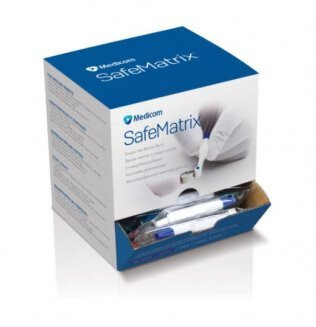
Products like Medicom SafeMatrix offer a pre-assembled, single-use design, eliminating the need for setup and reducing chair time. These systems feature adjustable bands and improved handling for better control during placement.
SafeMatrix bands are designed to:
-
Improve adaptation to cavity walls
-
Support tight interproximal contact
-
Increase visibility during placement
-
Simplify workflow with single-use convenience
These features help streamline restorative procedures while maintaining predictable results.
Clinical Example
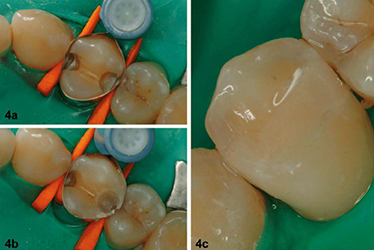
Matrix systems are particularly important in Class II restorations, where recreating proper proximal contact is essential for long-term success.
Clinical Applications
Class II Posterior Restorations
Matrix systems help establish proper contact and contour during restoration of proximal surfaces.
Large MOD Cavities
In more complex restorations, stable matrix placement is essential for maintaining tooth anatomy.
Situations with Missing Adjacent Teeth
Pre-assembled systems like SafeMatrix can be especially useful when traditional systems are more difficult to stabilize.
Chairside Tip
When placing matrix systems, clinicians often need strong grip and precise control, especially when working with wedges and tightening mechanisms.
DDS Dental Supplies offers Aura glove options designed to support clinical performance, including:
-
Aura Guard – enhanced durability for demanding procedures
-
Aura Elite – tactile sensitivity for precise handling
Reliable glove fit and grip can make a noticeable difference when placing and adjusting matrix systems during posterior restorations.

Materials Used in This Technique
Dentists performing posterior restorations commonly rely on:
Medicom SafeMatrix Matrix Bands
https://ddsdentalsupplies.com/pro-matrix-matrix-band-wide-6-mm-50-bx/?searchid=0&search_query=medicom+safematrix
Kerr OptiBond Universal Adhesive
https://ddsdentalsupplies.com/36519-kerr-dental/
Aura Nitrile Gloves
https://ddsdentalsupplies.com/search.php?section=product&search_query=aura&_bc_fsnf=1&brand=74
Final Thoughts
Matrix systems are a critical component of successful posterior restorations. While materials like composites and adhesives are essential, proper contact formation ultimately depends on technique and matrix selection.
Modern systems such as SafeMatrix provide clinicians with tools that simplify placement, improve control, and support predictable restorative outcomes.
Watch this video on Medicom SafeMatrix - Single Use Matrix Bands for more information: