
Clinical Versatility Without Compromising Control
In restorative dentistry, adhesive failures are rarely the result of a single error. More often, they stem from a combination of variables: substrate differences, moisture control, technique sensitivity, and material compatibility. Even when protocols are followed carefully, outcomes can still vary.
As adhesive systems continue to evolve, many clinicians are looking for materials that offer versatility without sacrificing predictability. Universal adhesives promise flexibility, but their real-world performance depends heavily on formulation and clinical application.
What Clinicians Expect from a Modern Universal Adhesive
Today’s universal adhesives are evaluated on more than convenience alone. Clinicians typically expect:
-
Consistent bond strength to both enamel and dentin
-
Compatibility with self-etch, selective-etch, and total-etch techniques
-
Reduced risk of post-operative sensitivity
-
Tolerance to minor variations in technique
-
Reliable performance across a range of restorative materials
While many products meet some of these criteria, differences in chemistry and handling can significantly affect clinical outcomes.
Where Universal Adhesives Differ in Practice
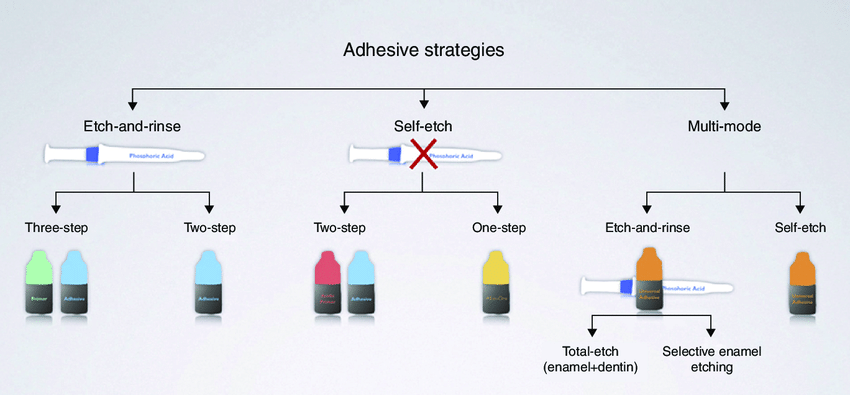
Although grouped under the same category, universal adhesives are not interchangeable. Key differences often appear in daily practice, including:
-
Chemical formulation, particularly the type and stability of functional monomers
-
Moisture tolerance, which can influence performance in less-than-ideal isolation
-
Application sensitivity, such as the air-drying technique and layer thickness
-
Substrate interaction, especially when bonding to enamel versus dentin
Understanding these variables helps clinicians select adhesives that align with their preferred techniques and the clinical demands of their practice.
How Kerr OptiBond Universal Fits These Clinical Considerations
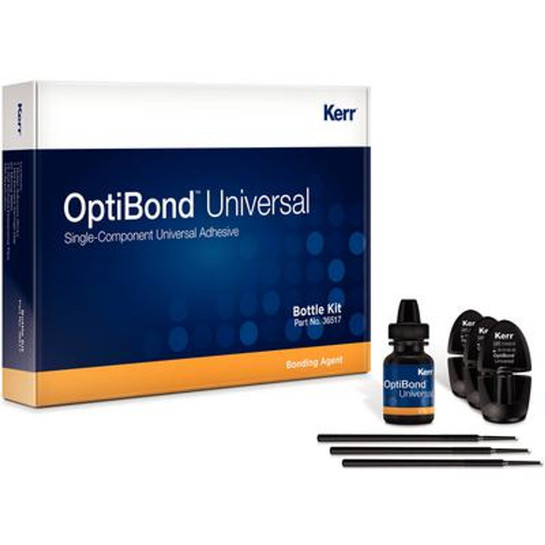
Kerr OptiBond Universal is formulated to support multiple etching strategies while maintaining consistent bonding performance. The adhesive contains an MDP monomer, which contributes to chemical bonding with tooth structure and a wide range of restorative materials.
For clinicians who routinely move between self-etch, selective-etch, and total-etch techniques, having a single adhesive system that adapts to different clinical scenarios can simplify workflows without requiring changes to established protocols.
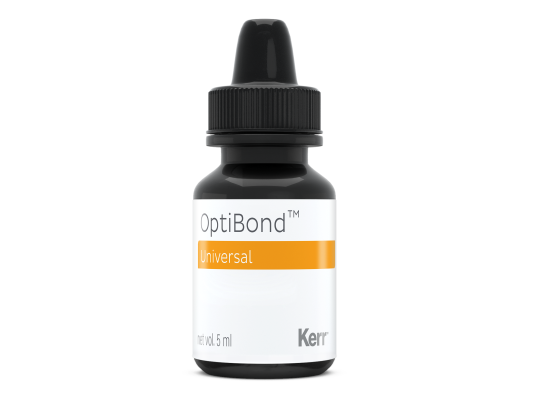
OptiBond Universal is commonly used in practices that value flexibility while maintaining control over bonding outcomes. As with any adhesive system, technique adherence and proper isolation remain critical to success.
Practical Considerations for Daily Practice
Material selection is often influenced by how a practice operates day to day. For clinicians seeking:
-
Fewer adhesive systems without sacrificing versatility
-
Predictable bonding performance across a range of indications
-
Compatibility with both direct and indirect restorations
A universal adhesive such as Kerr OptiBond Universal may integrate smoothly into existing workflows. Evaluating how an adhesive performs across enamel, dentin, and restorative materials can help determine whether it aligns with a clinician’s preferred approach.
Final Thoughts
Universal adhesives are not designed to replace clinical judgment. Instead, they aim to support it by offering flexibility and consistency across various restorative situations. When chosen thoughtfully and applied correctly, they can streamline workflows while maintaining high standards of care.
If you would like to learn more about Kerr OptiBond Universal and review product details, you can click the link below.